There’s a tempo to each and everyone’s life.
Not just how busy we are, but the speed at which we naturally think, notice, create, recover, respond, move and live.
I think many of us spend years trying to override our own tempo, without realising.
We hurry when we need to pause.
Push when we need to rest.
Keep going long after our attention, creativity or nervous system has quietly asked us to stop.
I know I have.
For years I believed that if I could just become a little more efficient, a little more productive, a little more disciplined, then life would finally feel manageable.
But often the opposite happened. The more I pushed, the less connected I felt — to myself, to other people, even to the things I loved.
What I’ve gradually come to understand, through both the Alexander Technique and my art practice, is that awareness changes things.
Noticing changes things.
When we stop long enough to ask:
Where has my attention gone?
What am I doing?
How am I doing it?
…something begins to shift.
Sometimes the shift is physical.
A tightening softens.
Breathing returns.
The jaw unclenches.
The shoulders stop trying to hold up the entire world.
Sometimes the shift is deeper than that.
We begin to realise we’ve been living according to a rhythm that doesn’t actually belong to us.
Modern life rewards speed. Quick replies. Constant output. Productivity. Momentum. But human beings are not machines, and not all nervous systems thrive under constant acceleration.
Some people move through life quickly and happily. Others need more spaciousness. More transition time. More quiet. More pauses between activities. Neither is wrong.
The problem comes when we lose trust in our own pacing.
I often see this in Alexander Technique lessons.
Someone arrives exhausted, overwhelmed, pushing through discomfort because they think they “should” be coping better. They’ve become disconnected from the signals that were trying to help them long before things became difficult.
The body usually knows before the mind catches up.
The Alexander Technique is not about becoming passive or doing less. It’s about learning to notice habitual patterns and giving yourself another possibility.
A pause before reacting.
A moment of awareness before tension takes over.
The possibility of responding rather than simply driving yourself forward automatically.
Ironically, when we begin living closer to our own natural tempo, we often function better, not worse.
There’s more clarity.
More creativity.
More ease.
More resilience.
And perhaps more importantly, there’s more enjoyment of ordinary life.
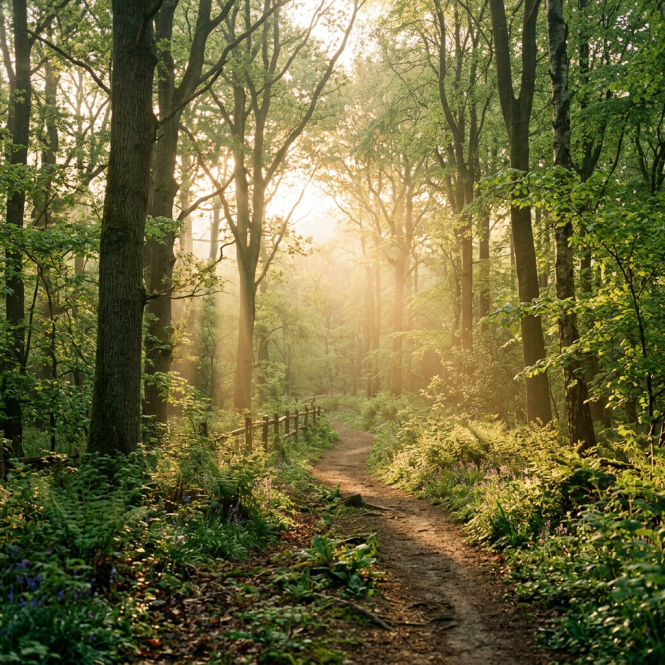
The way light falls through trees.
A cup of tea.
Birdsong through an open door.
The feeling of arriving somewhere rather than racing past your own life trying to keep up.
I don’t think life is meant to feel like a permanent emergency.
Sometimes the most important thing we can do is stop long enough to notice where we are, and whether the pace we’re living at is actually ours.
Enough. No more, no less.